
Languages: curiosities and secrets!

Translated or well translated texts?
28 May 2021
British English and Aussie English
24 June 2021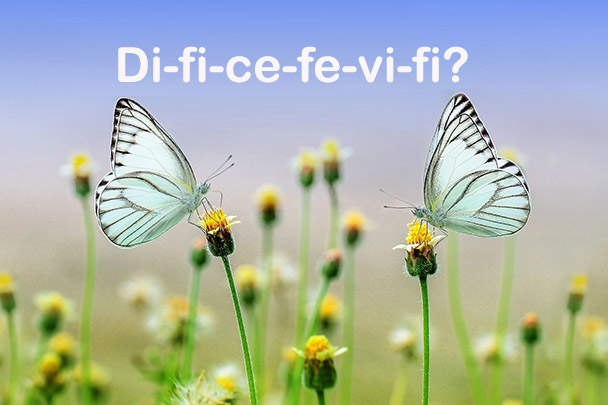
In 2021 there are approximately 7,139 spoken languages (source Ethnologue ), each with its own characteristics, in some cases truly unique, as we have also seen in one of our articles. To these real languages we could then add the artificial ones, which are not few.
How can we not be surprised, then, that with such a quantity and variety of real and non-real languages, truly interesting and unique aspects and peculiarities emerge.
SYNONYMS GALORE
In general, all languages have a number of synonyms for each term, but they are generally well below ten.
In some languages there are dozens of synonyms for a word or concept; this is the case of the word “ice” in the Eskimo Yupik language, there are at least 99 terms that identify as many as 99 different ice formations. In Hawaii there are about 200 synonyms of the word “rain”. In essence, to say that bad weather is coming in those islands there is only the spoilt for choice!
ONOMATOPOEIA
The onomatopoeic words are those that, thanks to their sound, immediately remind us of what they refer to, if for example we hear “woof woof” we know that it is the bark of the dog. But if a stranger heard this onomatopoeic word of ours, would he understand what it refers to? Probably not!
A seconda della lingua, infatti, le onomatopee sono molto diverse tra loro. Per citare lo stesso esempio di prima, in Inghilterra “bau bau” viene reso con “woof woof” e in russo con “gav gav”; allo stesso modo il nostro “gnam gnam”, per mangiare o masticare, si trasforma in “chomp chomp” o ancora il clacson delle macchine che è “beep beep” sia per noi, che per gli Inglesi, è “düt düt” in Turchia. Tornando al mondo animale, sembra che i galli si esprimano in maniera molto diversa a seconda del paese, il nostro “chicchirichì” diventa infatti “co-co-ro-co” in spagnolo, “gaggalagó” in Islandese, “tsoo-ghoo-roo-ghoo” in armeno, “goh-geh-goh-goh” in cinese e via dicendo.
Depending on the language, onomatopoeiae are very different from each other. To cite the same example as before, in Italy “woof woof” is rendered with “bau bau” and in Russian with “gav gav”. In the same way our Italian “gnam gnam”, to eat or chew, turns into a “chomp chomp” in English and the car horn that is “beep beep” both for us, and for the English, it is “düt düt” in Turkey. Returning to the animal world, it seems that the roosters express themselves in a very different way depending on the country, our “chicchirichì” becomes in fact “cock-a-doodle-doo” in English, “co-co-ro-co” in Spanish, “gaggalagó” in Iceland, “tsoo-ghoo-roo-ghoo” in Armenian, “goh-geh-goh” in Chinese and so on.
When we go abroad, it is better not to think of making ourselves understood with the onomatopoeic words that are used in our country, they would probably look at us in a strange way!
EXTINCTION DUE TO LITIGATION
In the south-east of Mexico the Ayapenaco language, with a history of 2 millennia, was on the verge of extinction because fewer and fewer people spoke it. It seems that years ago it even reached the point where the extinction depended on two people. The only two people, Manuel Segovia and Isidro Velazquez, left in the world able to speak the language were two old men who, due to an old quarrel, refused to speak to each other, until 2014 when they decided to make peace to try to prevent the language from becoming extinct! This happened also thanks to a project by some universities, supported by Vodafone.
ARTIFICIAL AND SECRET LANGUAGES
Languages are not only a mix of expressions, culture and customs of the peoples that originated in the mists of time and constantly evolving; some have been artificially created, such as the elven language or the dothraki, designed to give life to characters of famous sagas, which then achieved a worldwide success with the transition to the big screen. There are 200 artificial languages.
Other languages were invented by linguists and philosophers as “secret language”, accessible only to a narrow circle of people.
For example, it is not known to date who invented it, but in Italy the “alfabeto farfallino” or “butterfly alphabet”, allows Italian children to understand each other only, keeping in the dark all adults who do not know how to decipher this curious language! It is an elementary form of substitution cipher, the name “farfallino” comes from the word “farfalla” (butterfly); practically every vowel is followed by a two-letter syllable in which the first letter is always an f and the second is the vowel itself: for example the Italian word for home, casa, would become: cafasafa (ca-fa-sa-fa)!
Curious? Surf online and you will find the translator to turn your Italian sentences into a butterfly language!
Do you want to know more on the artificial languages, read this article!