
Peculiar languages, clicks and whistles!

Catcalling, no thanks!
13 April 2021
Englishisms, what a passion!
13 May 2021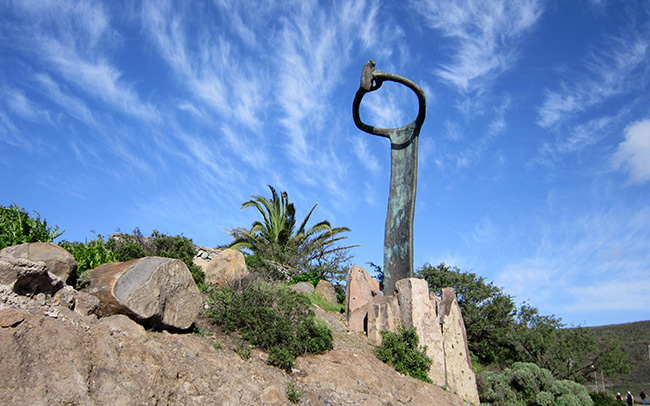
We will soon be able to move more freely and, maybe, in our travels we will come across some very particular languages. In some of these, very few or very many consonants are used, and there are also whistles and sounds similar to “click” that are part of the language itself or are the language itself!
Often the peculiarities derive, in fact, from a different use of the consonants in comparison to the use that most languages make of them. Think about Italian, we use 7 phonetic vowels (i, è, é, a, ò, ó, u) and 23 consonants; the English language has 5 vowels (a, e, i, o, u), 2 semi-vocals (w, y, which can be both vowels and consonants depending on their position in the word) and 19 consonants; the French language has 5 vowels, 1 semi-vocal and 20 consonants.
But in reality there are approximately 600 consonants and 200 vowels in the world and there are languages that differ greatly from the European average in the use of one or the other!
The rotokas language, spoken in Papua New Guinea, is an example of minimal use of consonants and vowels: there are only 12 letters representing 11 phonemes, that is, sounds capable of identifying the meaning of words, and of these 6 are consonants.
The pawnee language, still spoken today by some Native Americans in Oklahoma, also has limited use of consonants, having only 9, and instead using 8 vowels. The Pawnee language can be heard in parts of the 2015 film “The Revenant.”
In Africa there are some examples of languages that are on the opposite side, making extensive use of consonants and vowels: the !xóō or taa language, spoken in Botswana and Namibia, is a tonal language and has more than 100 consonants and 40 vowels, including sounds that we would certainly struggle to produce.
This language is, in fact, characterized by the use of “click consonants” produced by clicking the tongue against the palate or against the teeth. There are 5 different types of “clicks” distinguished by 5 different graphic signs (|, ǂ, !, ǁ, ʘ) depending on how the sound is produced. Unfortunately, historical African languages like this one have become extinct or are close to extinction, !xóō is in fact one of the few remaining.
Beatifu lthis video in which the great Miriam Makeba proudly explains the characteristics of the “click” sounds in her mother tongue and then sings a famous song, which is a wonderful example.
Then there are the whistled languages, mostly spoken in Central and South America, including the Bolivian siriono language. We find traces of a whistled language also not far from us. On the island La Gomera (Canary Islands) the silbo gomero was spoken, a whistled language, theoretically extinct, which has regained life, especially in the last decade, thanks to various events, including the birth of cultural associations and the fact that the basics of the language are now taught in local schools, so that the language would not become completely extint.
What is your favorite language among these? We chose to learn to whistle!
Immagine: l’immagine in testa mostra il monumento al silbo gomero nei presso del punto di osservazione Mirador de Igualero, La Gomera, Isole Canarie, Spagna.
Image: the image at the head shows the monument to the silbo gomero at the Mirador de Igualero observation point, La Gomera, Canary Islands, Spain.
Sources: Vanity Fair article, BBC News, various sources.