The Cherokee alphabet

Isolated and mysterious languages
14 March 2025
Languages without numbers or with unique numerical systems
1 April 2025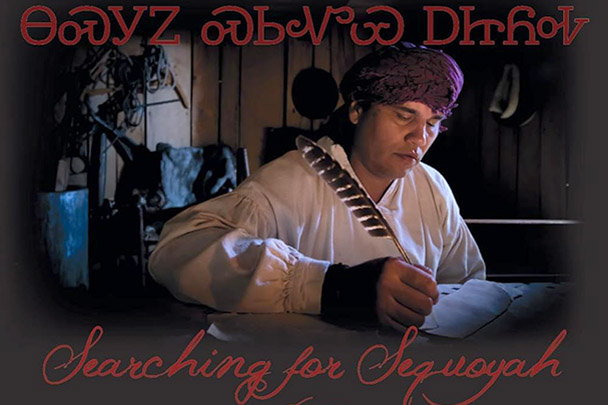
The Cherokee alphabet: a masterpiece of linguistic ingenuity
In the world of languages, there are Cherokee alphabet, a unique syllabary created by Sequoyah in the early decades of the 19th century. This writing system is one of the few cases in which a single person devised an entire alphabet for their language, radically transforming communication within their community.
Who was Sequoyah?
Sequoyah, also known as George Gist, was a member of the Cherokee Nation, born around 1770. Without a formal education but gifted with extraordinary observation skills and ingenuity, he realized the importance of writing for preserving the culture and history of his people. Inspired by European alphabets but aware of the phonetic diversity of the Cherokee language, he decided to create a writing system that was accessible to his people.
A unique system: the Cherokee syllabary
Unlike the phonetic alphabets used in many Western languages, the Cherokee system is a syllabary, where each symbol represents a syllable rather than a single sound. Originally composed of 86 characters (later reduced to 85), Sequoyah’s syllabary allows the Cherokee language to be written in an efficient</ and intuitive way.
Some symbols resemble Latin letters, but they have completely different pronunciations, since Sequoyah had seen the English language in written form but could not read it, so he created his own version of pronunciation.
Here are some examples of words in the Cherokee language:
- ᏣᎳᎩ (Tsalagi) → Cherokee
- ᎣᏏᏲ (Osiyo) → Hello
- ᏙᎾᏓᎪᎲᎢ (Donadagohvi) → Until we meet again (goodbye)
- ᏩᏙ (Wado) → Thank you
- ᏕᎩᎶᏆᏍᏗ (Degi’loquasdi) → School
- ᏩᏯ (Wah-ya) → Wolf
- ᎠᎵᎵ (Ali) → Dog
- ᏪᏌ (Wesa) → Cat
- ᏅᏙᎢᎦ (Nvdoi’ga) → Sun
- ᏗᎧᎿ (Dikanh) → Tree
- ᎠᎦᎵᎰᎵ (Agaliholi) → Happy
- ᎤᏍᏗ (Usdi) → Little/baby
- ᎤᏍᏗᎢ (Usdi’i) → Child
An immediate success
After perfecting the system, Sequoyah introduced it to his community, and its effectiveness was so remarkable that within a few years most Cherokees were able to read and write in their own language. In 1825, the Cherokee National Council officially adopted the syllabary, and in 1828 the first newspaper in the Cherokee language, the Cherokee Phoenix, was established.
The Cherokee language today
Despite the decline of the language, spoken today by only a few thousand native speakers and used in writing even less, Sequoyah’s syllabary is still in use and is taught in schools within the Cherokee Nations in the United States. Additionally, during the 2023 academic year, Yale University introduced a Cherokee language course, which is still ongoing.
With the rise of technology, the Cherokee syllabary has been integrated into Unicode fonts, allowing native speakers to write and communicate in Cherokee in the digital world.
An Example of Cultural Resilience
Sequoyah’s invention not only revolutionized communication among the Cherokee but also became a powerful tool for preserving culture and language. His syllabary remains a remarkable example of how writing can strengthen a people’s identity and keep a language alive through the centuries.
The story of the Cherokee alphabet reminds us of the importance of linguistic diversity and the value of writing as a means of expression and collective memory. For language enthusiasts, it is one of the most fascinating examples of human ingenuity and cultural resilience!
Would you like to try some small talk in Cherokee? Visit this page: Native History Association
Want to learn a Cherokee word every week? Check this out: Cherokee Word of the Week
Note: The image at the top of the article is from the official TV documentary film “Searching for Sequoyah” (2021). All rights reserved.